






By worf - Thu Feb 19, 2026 11:39 pm
- Thu Feb 19, 2026 11:39 pm
#332856
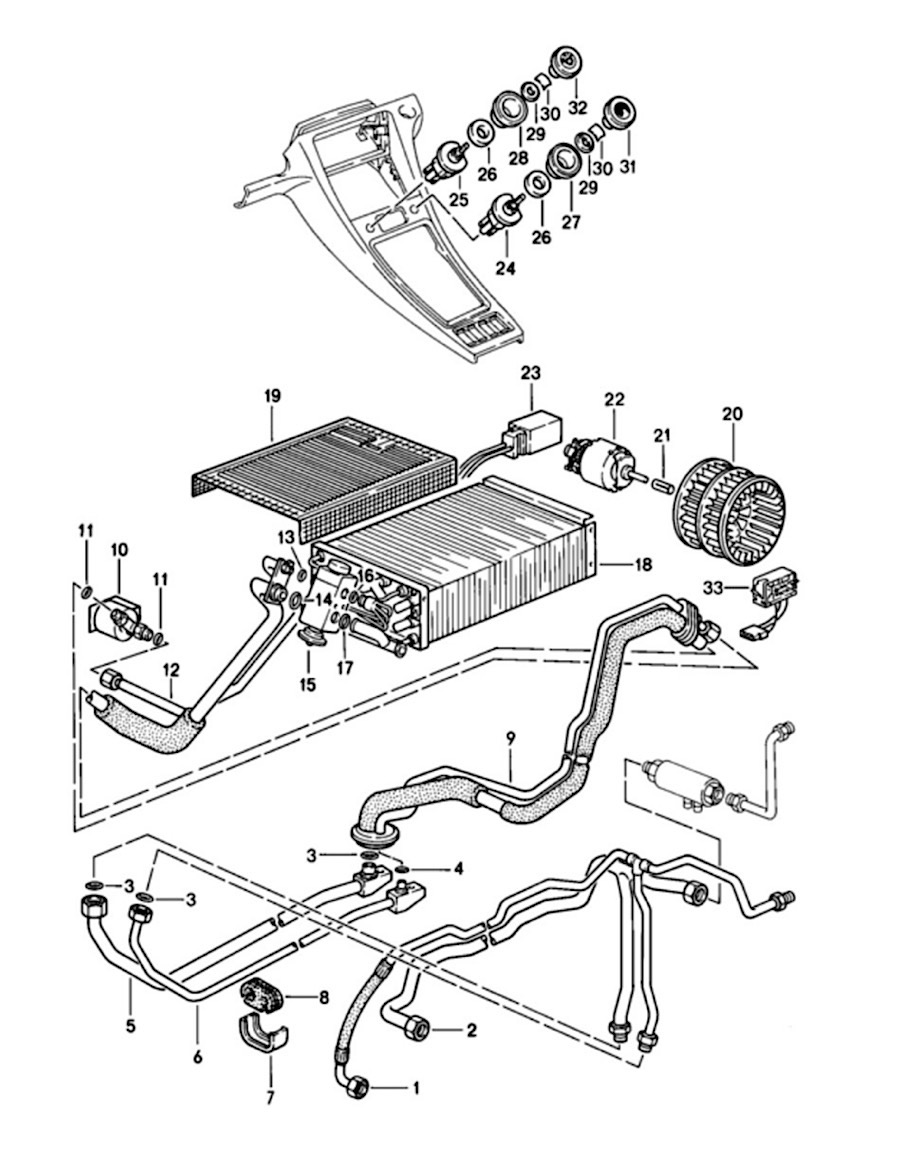
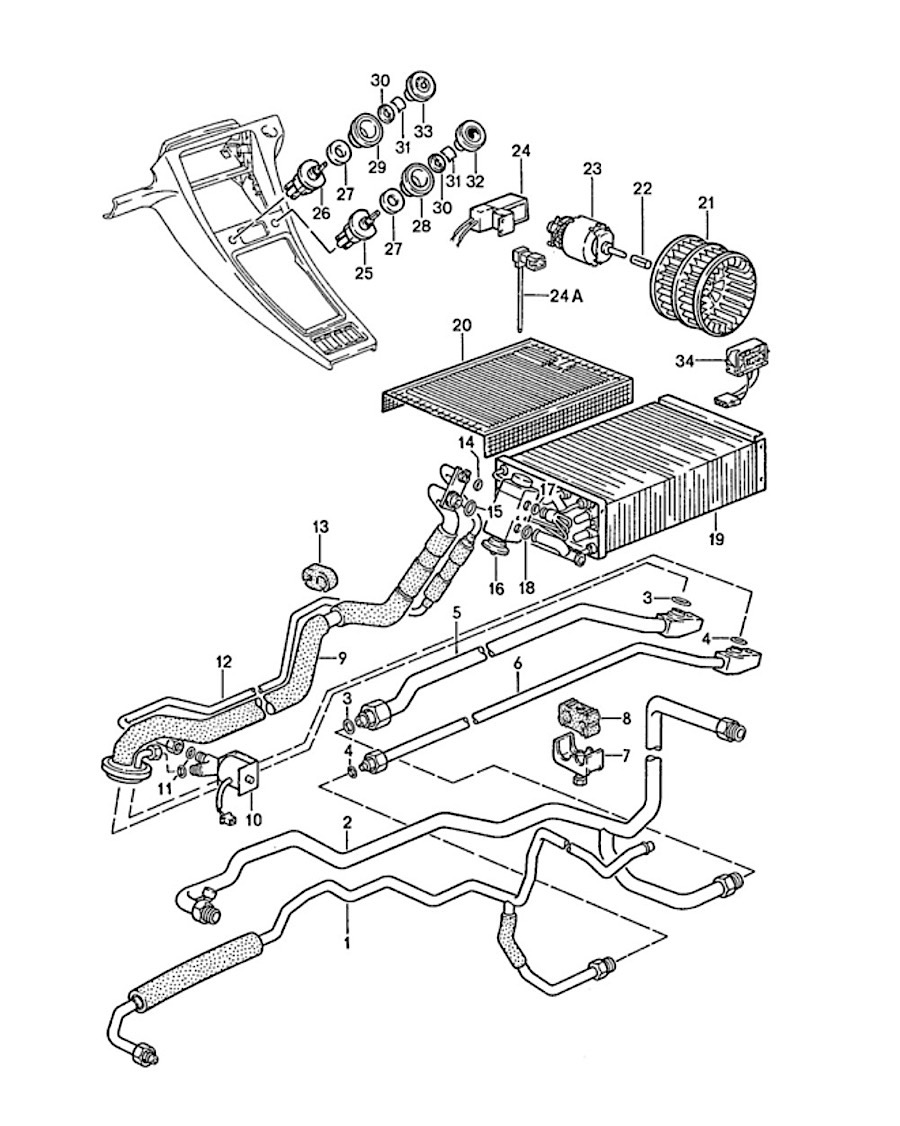
In another thread the topic of blocking-off the rear A/C came up. The purpose of this thread is to discuss the methods of doing so.
There's exactly one "right" way to do this:
Order the front-only engine bay A/C lines, pull the engine and replace the dual-AC lines with the front-only A/C lines. Then remove all the rear A/C components and fabricate a plug for the floor pan to replace the fitting that couples the under-car A/C lines to the interior rear A/C lines.
There are other methods that are almost-right:
- Attempt to replace the dual-A/C lines with front-only engine bay A/C lines without pulling the engine.
- Cut-off all of the under-car branch of the dual-A/C lines and figure out a way to cap them off - in situ.
Obviously none of those methods are "reversible" for trivial values of "reversible" and none of them are particularly easy.
For now, I will post on two reversible methods:
#1 - remove the under-car lines and plug all four "holes" thus opened with purpose-built plugs
#2 - modify the under-car lines by plugging their ends and reinstalling them.
The first method is the most expensive in terms of dollars but is 100% reversible.
The second method is the most expensive in terms of time, the least expensive in terms of immediate dollars, but does require replacing the under-car A/C lines to reverse the modification.
Both of these methods will result in some refrigerant oil pooling in the the bottom of the engine bay lines after the branch to the under-car lines. It should, however, be noted that oil always pools in the under-car lines and accumulates over time as the rear A/C sits unused. I do not believe that either of these methods will result in more oil pooled than if the rear A/C was intact and continued to be unused(*).
* My '91 GT's rear air is 100% removed as of 20 years ago. I used a variation of "cut off the branches" and method #2 below and its A/C continues to function perfectly (and with the OE almost-40-year old compressor.)
There's exactly one "right" way to do this:
Order the front-only engine bay A/C lines, pull the engine and replace the dual-AC lines with the front-only A/C lines. Then remove all the rear A/C components and fabricate a plug for the floor pan to replace the fitting that couples the under-car A/C lines to the interior rear A/C lines.
There are other methods that are almost-right:
- Attempt to replace the dual-A/C lines with front-only engine bay A/C lines without pulling the engine.
- Cut-off all of the under-car branch of the dual-A/C lines and figure out a way to cap them off - in situ.
Obviously none of those methods are "reversible" for trivial values of "reversible" and none of them are particularly easy.
For now, I will post on two reversible methods:
#1 - remove the under-car lines and plug all four "holes" thus opened with purpose-built plugs
#2 - modify the under-car lines by plugging their ends and reinstalling them.
The first method is the most expensive in terms of dollars but is 100% reversible.
The second method is the most expensive in terms of time, the least expensive in terms of immediate dollars, but does require replacing the under-car A/C lines to reverse the modification.
Both of these methods will result in some refrigerant oil pooling in the the bottom of the engine bay lines after the branch to the under-car lines. It should, however, be noted that oil always pools in the under-car lines and accumulates over time as the rear A/C sits unused. I do not believe that either of these methods will result in more oil pooled than if the rear A/C was intact and continued to be unused(*).
* My '91 GT's rear air is 100% removed as of 20 years ago. I used a variation of "cut off the branches" and method #2 below and its A/C continues to function perfectly (and with the OE almost-40-year old compressor.)
Last edited by worf on Thu Feb 19, 2026 11:46 pm, edited 2 times in total.
Hanlon’s Razor: Never attribute to malice that which is adequately explained by stupidity.
Heinlein’s Corollary: Never underestimate the power of human stupidity.
The Reddit Conjecture: Sufficiently advanced stupidity is indistinguishable from malice.
Worf’s Razor: Never attribute to stupidity that which is adequately explained by laziness.
Worf’s Identity: Sufficiently advanced laziness is indistinguishable from stupidity
Worf's Law: Once you've mitigated risk from stupidity and laziness in your endeavors, failure is usually the result of insufficient imagination.
 My 928 Inspection Guide
Heinlein’s Corollary: Never underestimate the power of human stupidity.
The Reddit Conjecture: Sufficiently advanced stupidity is indistinguishable from malice.
Worf’s Razor: Never attribute to stupidity that which is adequately explained by laziness.
Worf’s Identity: Sufficiently advanced laziness is indistinguishable from stupidity
Worf's Law: Once you've mitigated risk from stupidity and laziness in your endeavors, failure is usually the result of insufficient imagination.
 My 928 Inspection Guide
 - By h2pmr
 - By N_Jay
 - By MFranke
 - By NSXguy