Coolant temperatures/ Track Days
Posted: Mon Oct 20, 2025 1:16 pm
I’m sorry to monopolize the forum with DE questions you guys but opinions welcome again.
Last track day was ambient temp 83F, high humidity.
Driving hard with consistent boost for 20 min sessions per. Roughly every 60 minutes.
I’m running g40 coolant. No water wetter this time.
Temp gauge on cluster reaches early red section by mid to late session.
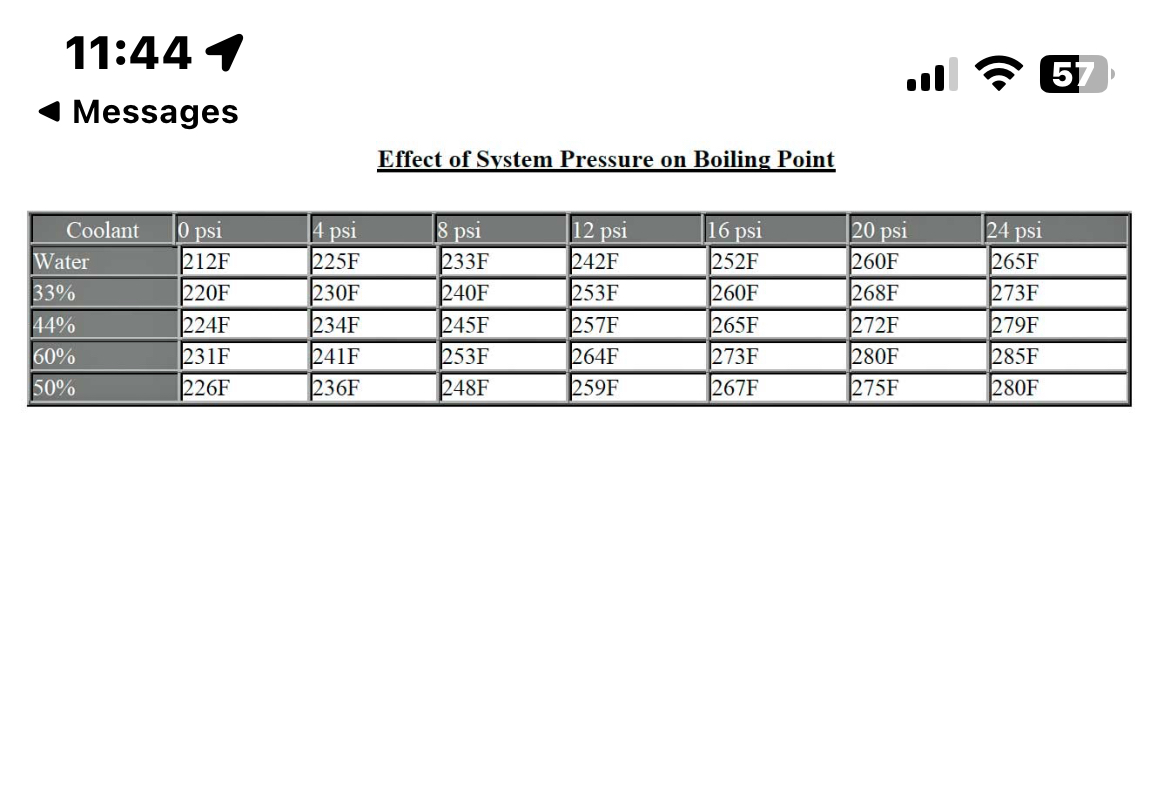
Independent temp gauge in upper radiator hose (essentially bridge temp) was 212-218F.
I’m thinking this is acceptable with pressurized systems but mentally 212F always makes me leery.
Question one:
What is a 928 coolant pressure range? I assumed 10-15 psi.
Question two:
What temp triggers coolant temp warning light?
I saw a factoid somewhere that number was 244F, but could not verify.
Additionally, what activates the light? I’m VEMS converted. Is that circuit in the pod?
Question three:
There’s no room for more fans, and biggest aftermarket radiator already exists.
If I need to I can run an additional exchanger from the heater lines. But, is that flow substantial enough to accomplish anything? I realize we are way into subjective territory.
Last track day was ambient temp 83F, high humidity.
Driving hard with consistent boost for 20 min sessions per. Roughly every 60 minutes.
I’m running g40 coolant. No water wetter this time.
Temp gauge on cluster reaches early red section by mid to late session.
Independent temp gauge in upper radiator hose (essentially bridge temp) was 212-218F.
I’m thinking this is acceptable with pressurized systems but mentally 212F always makes me leery.
Question one:
What is a 928 coolant pressure range? I assumed 10-15 psi.
Question two:
What temp triggers coolant temp warning light?
I saw a factoid somewhere that number was 244F, but could not verify.
Additionally, what activates the light? I’m VEMS converted. Is that circuit in the pod?
Question three:
There’s no room for more fans, and biggest aftermarket radiator already exists.
If I need to I can run an additional exchanger from the heater lines. But, is that flow substantial enough to accomplish anything? I realize we are way into subjective territory.
